Night Train to Lisbon — Pascal Mercier

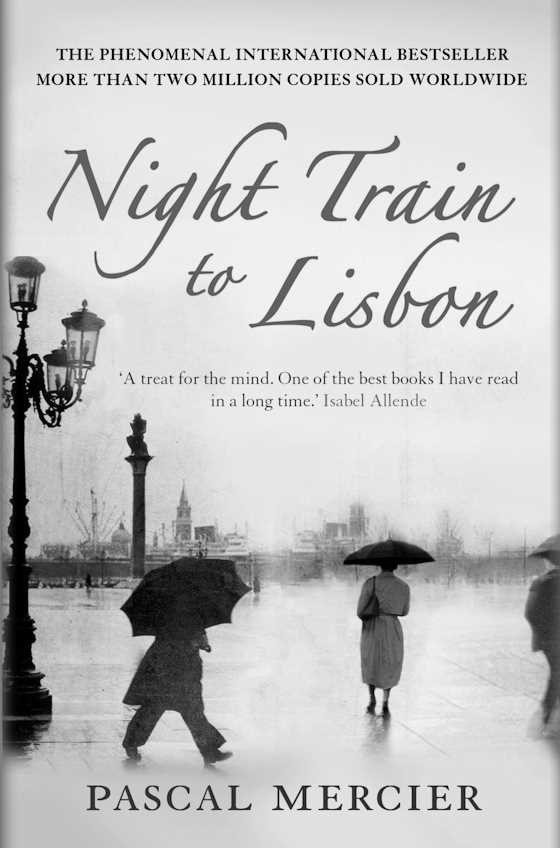
Night Train to Lisbon -- Pascal MercierAs someone who totally enjoys philosophy Huxley style, i found this book absolutely wonderful and incredibly thought provoking.

I really do love good philosophers who are able to place deep philosophical discourse into novels that can either be read just as stories and/or as works of philosophy.   Aldous Huxley was a master at this after becoming annoyed that only academia would ever read his philosophy papers and went in search of a much broader demographic — which Huxley certainly achieved.   Peter Bieri, AKA Pascal Mercier, while not having written as much as Huxley, certainly matches him, IMHO, for depth of thinking and skill of writing.

What i really enjoy about the philosophical novel is that, to my mind, it frees up the thinking of the philosopher to say much, much more than if they were simply writing an academic paper.   In a novel the philosopher can ascribe thoughts and ideas to fictional characters and not then have to carry any burden for holding such a view point themselves, whether they do or not, they can simply blame it upon the character and distance themselves from it entirely; while in academic philosophy what is written is pretty much always blamed on the philosopher.   History is littered with examples of people punished, tortured and/or killed simply for writing or saying the wrong thing, and has shown that philosophers are more than willing to whore themselves to whatever views the ruling classes, peers and/or academia hold at the time.   You only have to go to universities where future philosophers are trained to write what their professors want else they don’t get their degrees.

The philosophical novel, therefore, can be far more honest and express a much broader scope of ideas than any academic paper.

Anyways, get your thinking cap on if you want to read this one.   It’ll certainly get the neurons fired up.

Pascal’s Page
#philosophy #pascalmercier

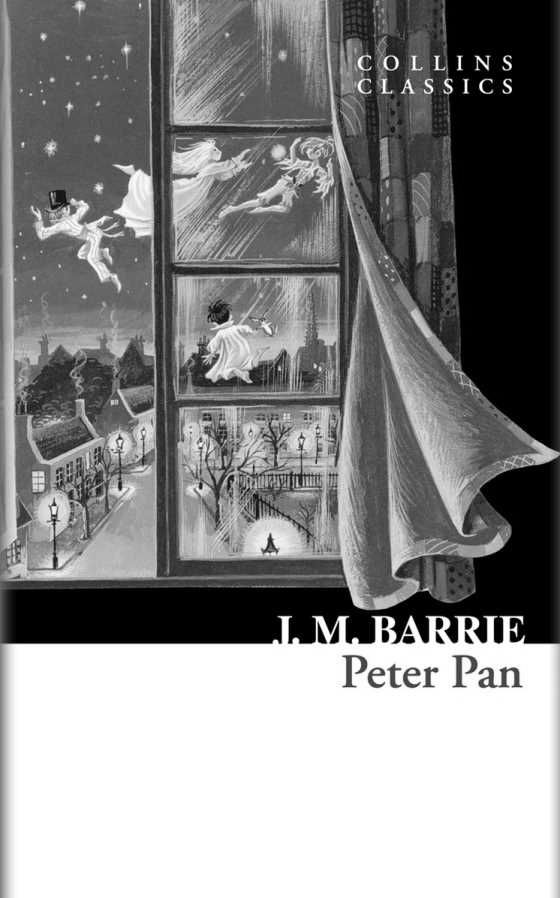
Peter Pan — J.M. Barrie

Peter Pan -- J. M. BarrieI’m quite confused by this story.

At 54 years old i really don’t remember Peter Pan from my childhood days, but i admit that i had the impression from films and things that he was quite a nice character — as was Tinkerbell.   However, in this, the real story behind it all, Peter Pan isn’t really a nice character at all — and Tinkerbell certainly isn’t either.

Most of the time, Peter is nothing but a gloating little spoiled brat who always has to have his way else he spits his dummy out of his pram.   And Tinkerbell, it has to be said, is a complete little bitch.   But then you get moments in the story, in complete contrast, where the 2 of them are bestowed with all manner of wonderful virtues.

Who i did find interesting, however, was the character of James Hook, who was far more complex than the films, etc., would have us believe — frightened and out of his depth, yet somehow always managing to survive — until the end.

Apparently, the character of Peter Pan was based on Barrie’s older brother who died as a child, and therefore never grew up.   So it does make one wonder just what Barrie thought about his older brother and how he was affected by his death and his parent’s attitude to it.   He was 6 when his brother died and then sent away, from home to school, at 8.   Barrie did write a biographical piece about his mother, Margaret Ogilvy, which maybe would unearth some clues, so i’m going to read that next to find out.

At the end of it, for now at least, i’m left thinking that this is nothing but a critique by Barrie of how his parents handled his brother’s death, and also parenting in general (as seems to be quite a bit of The Little White Bird).   Although Barrie became a ward of other children, he never had any children of his own, so there is this to factor into these stories.

One of the things that also stands out for me, is how Peter chops of Hook’s hand and feeds it to the crocodile that is always ticking and haunting Hook for the rest of his life.   Is this a metaphor concerning the death of his brother taking a piece of his parents with him and their inability to move on from the tragedy for the rest of their lives, forever ticking away reminding them of their own mortality?   And Hook’s view towards the children maybe adds more clues.

At the end of the day, you can read Peter Pan as a shallow, children’s, make believe, bedtime story book, or you can look deeper into what Barrie’s drive was to write these books in the first place.   It’s certainly very different to Lewis Carroll’s drive to write the “Alice and Wonderland” books — less said about that the better, i think.   But whichever way you decide to read Peter Pan i think you’ll certainly enjoy it.   It’s a beautifully written piece of Victorian literature that has stood the test of time and will undoubtedly stand up to a lot more time in the future.

As a bonus, this version of Peter Pan has a “Classic Literature, words and phrases” dictionary at the end (which is nearly as big as the book itself).   So a great help for anyone wanting to have a good Vic Lit adventure.

Some more “Peter Pan and Neverland” books.

J. M. Barrie’s Page

#jmbarrie #peterpan #viclit

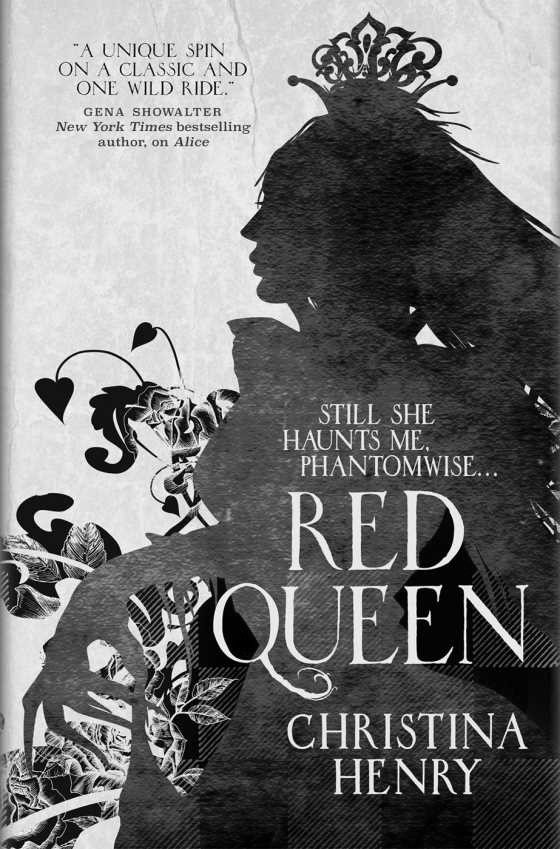
Red Queen — Christina Henry

Red Queen -- Christina HenryI really enjoyed reading Alice and was expecting a bit more of the same, but this book feels quite different.

Whereas Alice had me feeling like i was reading the adventure of an escaped patient from a max security mental hospital who hasn’t had her meds and has gone into full blown psychosis; Red Queen read far more like normal fantasy, probably due to Alice finding her magical abilities in this book.   Both books have been great in their own way and i’ve thoroughly enjoyed reading this wonderful new take on Alice in Wonderland.

I certainly look forward to reading more from Christina in the future.

Here be some more “Alice and Wonderland” books.

Christina’s Page

#aliceinwonderland #fantasy #ChristinaHenry

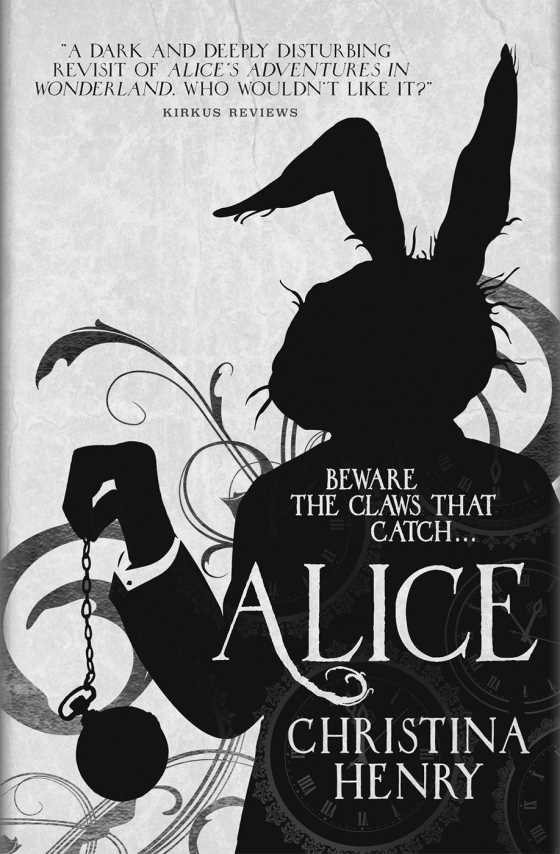
Alice — Christina Henry

Alice -- Christina HenryWow.   This was awesome.

This can pretty much be read as the story of a paranoid schizophrenic who has escaped from a max security mental hospital and is rapidly withdrawing after being heavily medicated for years on anti-psychotics.   It truly has the hall marks of full blown psychosis.

Of course, you can read it as a fantasy novel that bears no relevance to the real world if you don’t want to think about why people in full blown psychosis due to rapid withdrawal of anti-psychotic meds go around killing people.

Whichever way you want to read this, it’s a fantastic re-telling of the Alice in Wonderland story.

Straight onto Red Queen now.   I’m so looking forward to more of Alice and Hatcher.

Here be some more “Alice and Wonderland” books.

Christina’s Page

#ChristinaHenry #aliceinwonderland #fantasy

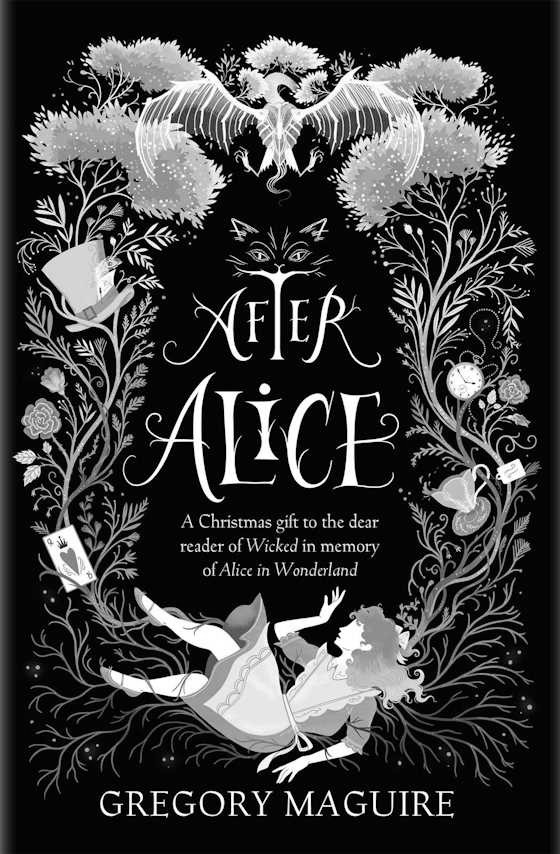
After Alice — Gregory Maguire

Reading other reviews one finds a lot of complaining about Gregory’s lexicon.   While i can agree that Gregory does have a rather outdated lexicon, i think those who wrote those reviews are very much missing the point of Gregory’s writing.   The Wonderful Wizard of Oz and Alice’s Adventures in Wonderland were very much books of the Victorian age and Gregory’s writing in his spin offs from both simply tends to keep with the language of that age and the words used — he is, after all, a Victorian spin off specialist so why be surprised at the Victorian use of words in his writing?   I would definitely say that all the words i had to quickly look up on my Kindle were Victorian throw backs and to be quite honest they didn’t detract from Ada’s story at all for me.   If anything, they brought a genuineness to Ada’s story in that they kept it within the upper middle class Victorian world in which this is set.
And i also find it nice to learn a few new (old and forgotten) words to baffle people with: pompous as accused by curmudgeons or simply having fun with language?

There are certainly worse writers out there for using overblown language, and they have no excuse at all for doing so as they are writing contemporary fiction, not Victorian spin offs.

If you can’t be bothered with a little Victorian style language then maybe this book isn’t for you.   But if you can just accept it’s there for a valid reason and deal with it accordingly and enjoy expanding your vocabulary a little along the way then you’re in for a good yarn.

I read this immediately after reading the original 4 books on Wonderland and i felt it flowed really well from those.

Although, unlike the original Alice books, this book is certainly not for young children.   It’s definitely aimed at a more mature audience: those who enjoyed Alice in their childhood who would like to revisit Wonderland as late teens and adults.

The story does end with several loose ends, which i hope means Gregory will be coming back to Wonderland in the future to finish these loose ends off.

I for one enjoy Gregory’s writing and will always be a fan of his books.

Here be some more “Alice and Wonderland” books.

Gregory’s Page

#gregorymaguire #aliceinwonderland #viclit

The Hunting of the Snark an Agony, in Eight Fits — Lewis Carroll

The last of the 4 books in the Alice series.   Although it’s not actually about Alice because Carroll had stopped chasing after Alice Lidell at this point in time because Alice had grown tall.   He had moved onto another young girl, i believe her name was Gertrude.   So one wonders what he alludes to with the word, “Snark”.
That aside, it’s a great poem, but the layout on this version leaves a lot to be desired.   But it is a free version so shouldn’t really complain.

Would recommend paying a few pence for a version with a better layout if you do wish to read it.

Here be some more “Alice and Wonderland” books.

Lewis’ Page

#poetry #lewiscarroll #aliceinwonderland #viclit

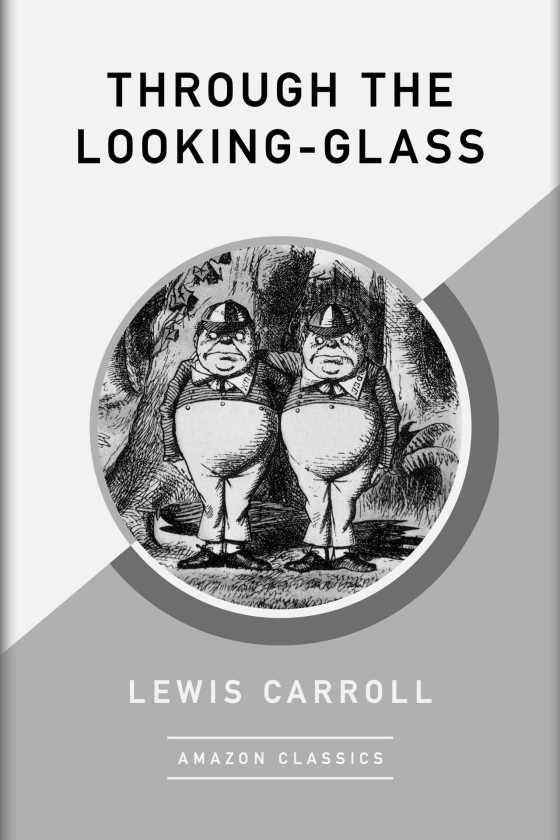
Through the Looking-Glass — Lewis Carroll

>As much as these are wonderful stories, if we just take them as stories, the tale behind them is, i think, a rather dark and disturbing one.

Who is this written for?   Is it to confuse or calm the young girls that Carroll was chasing after?   Or is it Carroll dealing with his demons?   Or a bit of both?

Here be some more “Alice and Wonderland” books.

Lewis’ Page

#lewiscarroll #aliceinwonderland #viclit

Alice’s Adventures Under Ground — Lewis Carroll

I’m having an Alice binge at the moment and decided i needed to go back to the very beginning of the story to see how it came about.
This book is great, not just having the original story, but also letters to and from the author at the time.   A very enlightening piece of literary history which puts the whole Alice and Wonderland thing into a somewhat disturbing perspective which i’ll let everyone else make their own minds up about.

Anyway, disturbance aside, i can’t change history, so i’m going to continue the journey and get straight into Alice’s Adventures in Wonderland, which is the re-written and added to edition for public consumption of this original which was written purely for Alice Liddell by Charles Dodgson (aka Lewis Carroll).

Definitely something all adults should go back and read — and maybe learn not to take things too seriously, or at least, at face value.

Here be some more “Alice and Wonderland” books.

Lewis’ Page

#lewiscarroll #aliceinwonderland #viclit

The Pleasure Trap — Douglas J Lisle

The Pleasure Trap by Douglas J Lisle is probably one of the most important books for surviving the modern age.

My thoughts on this:

When Homo sapiens first stood upon the Earth we were born into a savage garden where most things either wanted to eat us or were poisonous, and if we wanted to survive and help our children to survive to an age where they could have children we had to learn to navigate that savage garden in a precise way to avoid the predators and parasites and toxic things that live within it.

Fast forward to the 21st century and our savage garden is now capitalism.   And the predators and parasites are corporations and the poisonous things are the food and medicine that they sell to us.   They lure us in by using our evolved nature — that suited us perfectly upon the Earth thousands of years ago — against us.   We are for the most part seemingly defenceless against the tirade of sweet, fat and salty food and medicines that relieve symptoms but never deal with the cause.

But are we defenceless?

Not if you’re aware of the pleasure traps that they have created to enslave you.

Chronic diseases, the diseases that once were the diseases of kings and the ruling classes, are now the diseases of almost everyone thanks to the corporatisation of the food chain and the medical industry.   And chronic disease is caused by nothing more than eating too much of the wrong foods and taking the wrong medicines.

Read this book and learn how to avoid the pleasure traps and how to extract yourself from them when you fall into them.

Your future and your children’s future and their children’s future lies within your grasp of the pleasure traps that corporate predators and parasites have placed in the savage garden of capitalism.

It’s your choice.

You can take your sick, suffering part in their eugenics experiment or walk away from it and be healthy and free.

PS. If you enjoyed the message within this book then you may also enjoy reading Anna Lembke’s book Dopamine Nation: which will give you a few more tools for your dopamine control toolbox.

Douglas’ Page

#food #bigfood #bigpharma #DouglasJLisle

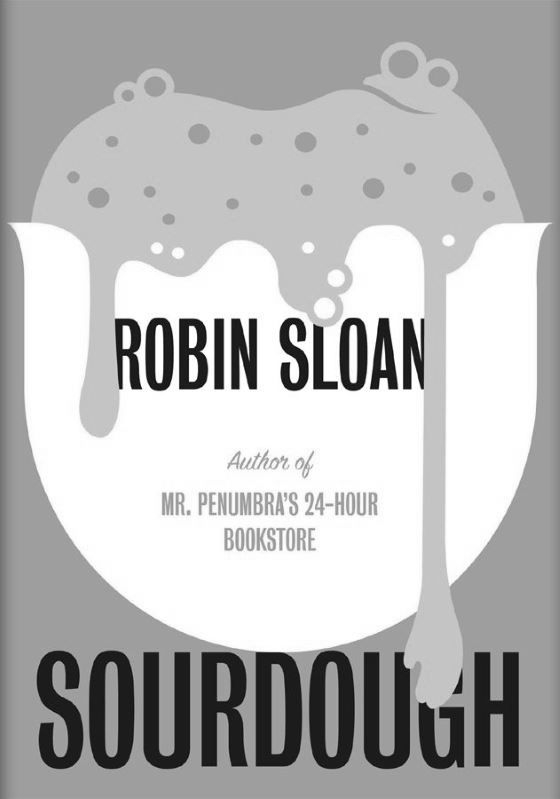
Sourdough — Robin Sloan

Sourdough -- Robin SloanIf you liked Robin’s Penumbra books then throw this on your reading list and have at it: more of that Robin Sloan style for you to enjoy.

If, however, you’ve come across this book because you’re into sourdough baking and was looking for a story to read that reflects the real challenges, difficulties etc., of baking your own sourdough breads, then you’ll probably want to read something else.

Conversely, if you’ve come across this book because you’re into sourdough baking but are able to put aside — for a while at least — your overly strict, sourdough-baker expectations to read a fun story about a magical and strange starter from a mysterious foreign land — including it’s musical tastes — then you just might really enjoy a good, fun read and become another Robin Sloan fan just like the rest of us.

Robin wrote an article all about sourdough: “Sourdough: A Confession, a Recipe, and a Playlist”.

And check out my review of the album that the Sourdough music was inspired by clicking here.

Robin’s Page

#scifi #robinsloan