North — Scott Jurek

North -- Scott JurekI really enjoyed reading Scott’s earlier book Eat and Run, so i was really looking forward to giving this a read.

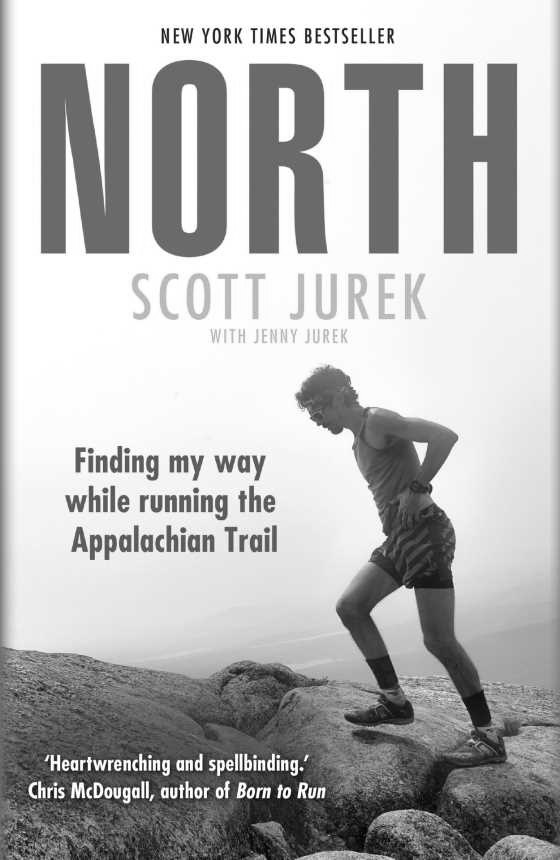
To sum this book up, this is one of the greatest ultra runners of all time who, after having retired from professional competition, gets his outdoor fix by going hiking along stretches of the PCT with his wife and best friend, Jenny.   During one of these hikes they have a big argument and Scott has a bit of a existential crisis and decides he needs to fix himself by returning to suffering and tells Jenny that he’s going to attempt the Appalachian Trail FKT.

Best of all is that he manages to rope Jenny in as his sole support crew member in a converted van suitably named ‘Castle Black’ by telling her that it’ll be a great family summer holiday for their small family of two.

As we go through each chapter of the book we are introduced to each section of the trail, beginning with Scott’s perspective on it followed by Jenny’s.   And what a journey it is.   It’s utterly ridiculous, but also utterly amazing at the same time.   And if you aren’t a bit soggy eyed at the end then you is heartless.

An amazing journey with an amazing couple of human beings — and a ton of friends, old and new, who helped big time along the way and made it all possible.

If, like me, you enjoyed Scott’s first book, then make sure you give this a read some time.

Extra

On 2nd July 2019, Scott and Jenny Jurek made an appearance on the Plant Strong Podcast in which they both talk a fair bit about this massive journey they went on together — well worth a listen: “Fueled by Plants: Scott & Jenny Jurek”

Scott’s Page
#scottjurek

Star Born — Andre Norton

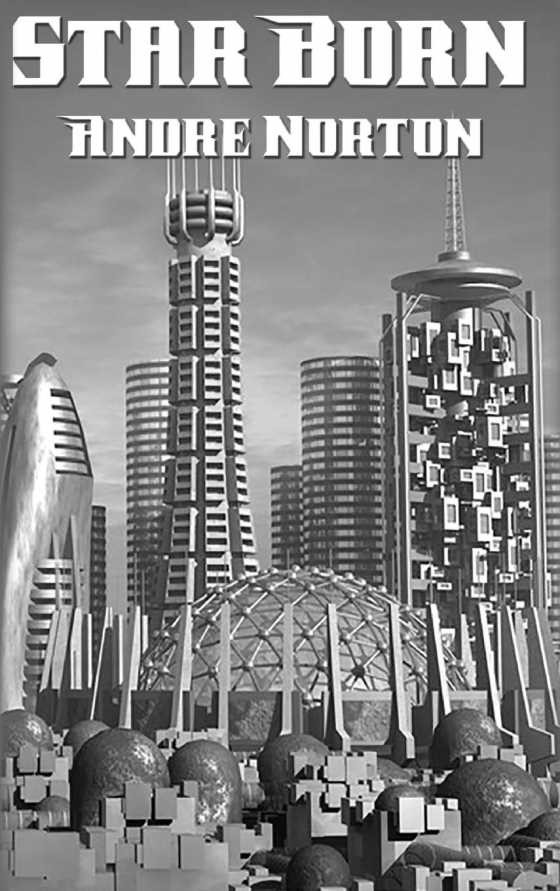
Star Born -- Andre NortonLike Storm Over Warlock, this is another book with Andre mixing sci-fi and fantasy.   This time its the turn of mermen to be mixing it with the alien invaders/visitors/settlers to their planet.   Once again, Andre carries this off brilliantly: wonderfully written, classic sci-fi.

Quite thought provoking, in that it dips its toe into the early ideas of the Star Trek prime directive.   Should we interfere, should we get involved?   But if we, in the future, launch ourselves into the cosmos and into other people’s societies, then haven’t we already broken that prime directive?   Simply putting ourselves into space is interfering with whatever is already out there, yet here we go spewing our space junk in every direction in arrogance and ignorance not even caring what effects we may have.

There’s part of this harkens back to Childhood’s End and the proclamation that the stars are not for humans, and that Homo sapiens would become extinct upon the Earth and never reach beyond because we simply aren’t suitable and capable to do so mentally.

Maybe it’s too late to realise and accept that just because we can do something physically does not mean that we should do it.   But off goes science and progress charging into the future without any care or consideration for the spiritual progress that is needed to temper our greed and wants.

Let’s be honest, we aren’t charging into space for the well being of our species, we’re charging into space due to xenophobic paranoia that some other country will get there and exploit it first.   The space race has never been a marvel of human development, but a charge fuelled by fear, greed and paranoia to beat other’s to the prize and plant a stupid flag before someone else can in order to claim that little bit of the infinite cosmos for our own little inbred sub-set of Homo sapiens.   This is not a good way to introduce our species to the cosmos.   Homo sapiens are so fucking crass!

Also available in the collections Star Flight, The Andre Norton Megapack and Visions of Distant Shores.

Andre’s Page

#scifi #andrenorton

Childhood’s End — Arthur C. Clarke

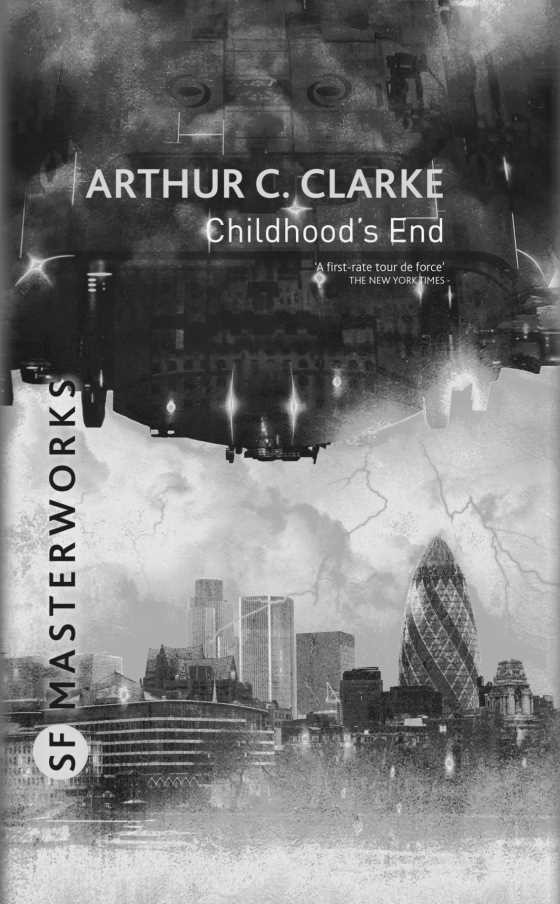
Childhood's End -- Arthur C. ClarkeIt’s not surprising that this book is part of the “Gollancz SF Masterworks” series.   It really is a must read for all sci-fi fans as one of those early sci-fi books that set the standard for others to follow.
The prophetic nature of this book, while quite nail-on-head in some ways, is quite funny at times as to how short it actually fell.   For example, Arthur thought that it would take aliens to bring an end to wars, giving humanity peace ever lasting before we gave up striving to improve our lives and instead spending hours every day watching pointless programs on TV:

Do you realize that every day something like five hundred hours of radio and TV pour out over the various channels?   If you went without sleep and did nothing else, you could follow less than a twentieth of the entertainment that’s available at the turn of a switch!   No wonder that people are becoming passive sponges — absorbing but never creating.   Did you know that the average viewing time per person is now three hours a day?   Soon people won’t be living their own lives any more.   It will be a full-time job keeping up with the various family serials on TV!

And yet here we are 60 years after this book was published and while no aliens have given us peace on earth and eternal leisure people are watching far more TV than Arthur predicted for our age of enlightenment.   The 2018 viewing figures for the UK is an average of over 4 hours a day.   And that’s the average.   Some people are watching far more than that as people like myself have no television at all and haven’t had for over 20 years.

No, it’s not going to take aliens to bring an end to Homo sapiens, the “wise man” is doing a really good job of its own demise without any outside assistance whatsoever:

In a few years, it will all be over, and the human race will have divided in twain.   There is no way back, and no future for the world you know.   All the hopes and dreams of your race are ended now.   You have given birth to your successors, and it is your tragedy that you will never understand them — will never even be able to communicate with their minds.   Indeed, they will not possess minds as you know them.   They will be a single entity, as you yourselves are the sums of your myriad cells.   You will not think them human, and you will be right.

Yes, we are becoming two separate species, with the old conservative Homo sapiens stuck in their ways, trying in vain to hold the world back while the progressive and future looking people are slowly evolving beyond the comprehension of those who cling to their ancient rights.   It won’t be long now before Homo sapiens becomes extinct, because, as Arthur says, the stars are not for man.

All that said, it’s a great book.   Wonderfully written, thought provoking, intelligent sci-fi for progressive and future looking people who look towards the stars instead of into televisions.

Arthur’s Page

#scifi #sfmasterworks #arthurcclarke

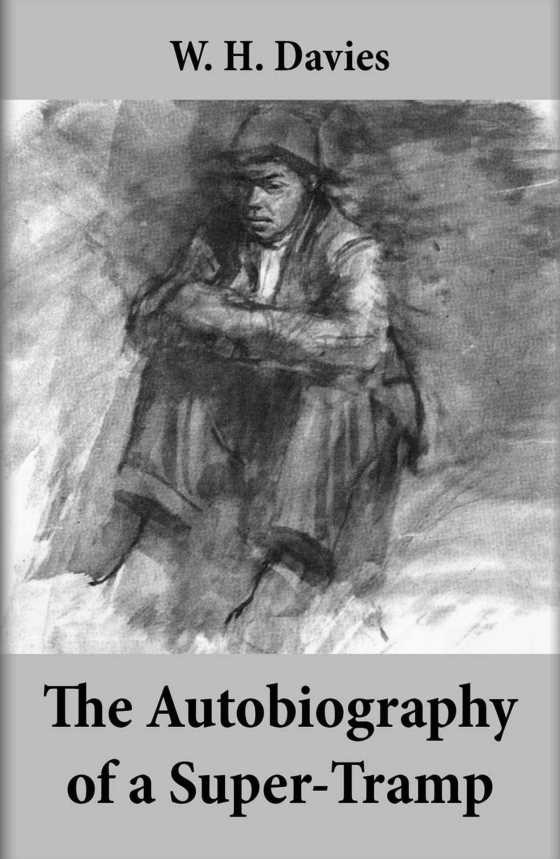
The Autobiography of a Super-Tramp — W. H. Davies

The Autobiography of a Super-Tramp -- W. H. DaviesMy school house master, Peter Forest, who was also my maths teacher, one day stated in front of the whole class that i’d either grow up to be the next Einstein or a tramp, and that he feared it would most probably be the latter.   Suffice it to say, i never did get around to doing that degree in theoretical physics.

So when i found this book on Amazon it reminded me of Peter Forest and his condemnation of my future and was certainly instrumental in my purchase.   I wasn’t disappointed, so thanks Peter.

The strange thing was the timing, as i let the “Infinite Improbability Drive” always select my next book from “The Pile” and it’s only been a couple of books since i finished Into The Wild, about Chris McCandless, AKA, Alexander Supertramp.   This book certainly flows nicely on from that.   It makes me wonder if Chris had actually read this amongst all the other books mentioned in his story.

William covers his adventures as a tramp during the late 1800’s, where he ventures far and wide.   The funniest thing for me was that he was a trustifarian.   I had no idea that these creatures existed back in the 1800, but it’s certainly true in William’s case, and he even admits it in the book.

When his grandmother died, instead of willing him her property, which she knew he would squander rather quickly, she instead put it into trust from which he was given an allowance.   So off he goes to America, tramping around, living on hand outs and goodwill, while all the time his weekly allowance from his trust fund is being saved up for his return.   And he can return at any time, by working cattle ships from Baltimore, and even getting paid while doing so.

Even later on when he gets back the England, he continues to drop out into his tramping lifestyle while his trust fund rebuilds his bank account in order to fund his next adventure.   I wonder if William was the original trustifarian, were there others before him?

Without a doubt, a very good inside look into the mind and lifestyle of the typical trustifarian.   But, on top of that, it’s a very revealing look into this odd sub-culture of the underclass of the age and the lifestyles they lead and how they managed to support themselves.   Although, one can’t really get away from realising that most of these people were simply down where they were due to alcoholism, with every opportunity of spending any penny they managed to accrue on getting drunk always eagerly taken — no, nothing much changes.

Anyways, an enlightening piece of history of the Victorian age seen from a very different view point to the normal history books and biographies.

William’s Page

#viclit #autobiography #williamhenrydavies

The Woodcutter — Kate Danley

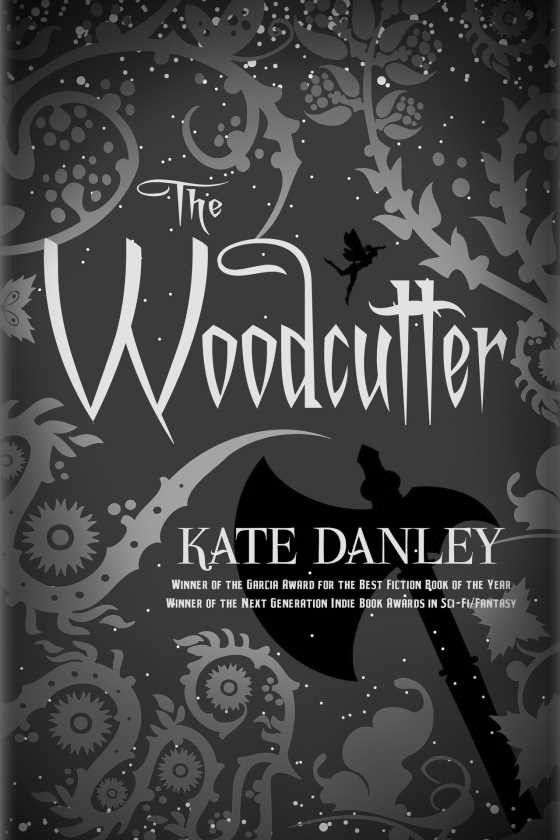
The Woodcutter -- Kate DanleyThis is like: let’s-see-how-many-fairy-tales-and-folkloric-things-can-you-fit-into-346-pages-and-still-manage-to-create-a-really-good-story.
From Odin to Sleeping Beauty; Jack, plus the Beanstalk, to Baba Yaga; and everyone in between, this is non-stop from the first page to the last.   And somehow Kate has managed to make it all work in this wonderful story about a woodcutter — one who doesn’t actually cut wood.

If you like fairy tales, folklore, or are maybe looking for something different in a fantasy story, then i don’t think you’ll be disappointed with The Woodcutter.

My first Kate Danley book, it won’t be my last.

Kate’s Page

#fantasy #katedanley

New Caviar — Stephany Brandt

New Caviar -- Stephany BrandtA little novella that just gets to the point.
I really enjoyed it.   It’s certainly in the realms of the believable that people would spend ridiculous amounts on a tin of some food when you see how much some people are prepared to pay for a bottle of wine or whiskey.   And it’s also not so unbelievable that people will just eat whatever is the fashion without ever questioning the reality of where that substance that they’re shoving into their mouths came from, or even what’s in it.

If Rank Hovis can get millions of idiots eating their Quorn pseudo food, and Mcfilth can make billions a year in sales, isn’t it only a matter of time before a corporation could get people to eat…

…hints of Soylent Green — eat up!

Stephany’s Page

#scifi #stephanybrandt

Into the Wild — Jon Krakauer

Into the Wild -- Jon KrakauerI enjoyed watching the film, a rarity for me, so when this came up on a Kindle deal for 99p i didn’t hesitate.
After watching the film i was of the mind that Christopher McCandless was a total idiot, as apparently were most of the people who heard the basic story of his demise.   But was it fair on him to be portrayed in that way?   I wanted to know a bit more.

Jon was the reporter who first brought this story to the world in an article he was asked to write for Outside Magazine.   But he knew he hadn’t done the story justice in the time constraints that he’d had to get that article written, so he went back over the whole story and wrote this book.

And this book really does put things into context.   One thing the film doesn’t cover is the childhood that Chris and his sister suffered under a domineering, controlling, and oft times abusive, father who demanded excellence all the time, and when Chris found out the truth about his father’s excellence — how Chris and his sister came to be born — i think something really snapped inside him.   He just wanted to be free of everything his father represented, to get as far away from it as possible — and having been bought up by a father like that who i had to escape from at 15 years old into my own wilderness, i can’t blame Chris whatsoever for being like he was and doing what he did, in fact, i totally understand.

As to the writing, this story is incredibly well thought out and presented and really does put a lot of Chris’ behaviour and attitude into a much broader perspective than a film could ever hope to get to.

So if you have watched the film then please don’t just stop with that view of Chris, i don’t think that’s fair.   Take a little while, read this book and get to see a much wider picture of Chris McCandless.

Jon’s Page

#jonkrakauer

The Bees — Laline Paull

The Bees -- Laline PaullNow that was quite a strange experience.
To begin, this is listed on Amazon as “Dystopian” and “Dystopian Science Fiction”, it is neither of these.   How anyone can get to class the typical life cycle of a hive of a honey bee hive to fit either of those genres is utterly beyond my comprehension.

If i were to genre-ise this book then i would put it firmly in the children’s fantasy and children’s education section.   Why?   Because if you have a child who is getting to the age where you have to have that conversation about the birds and the bees, then i think this book would be a great way to broach the subject, both literally and metaphorically.   It pretty much covers everything there is concerning the life cycle of bees but presents it in an anthropomorphic way that i would consider appropriate for children learning about these things.

If i was home schooling a child then this book would definitely be getting read and explored a lot further.   If it was juxtaposed with a genuinely accurate text about the life cycle and habits of honey bees there would be a great deal to discuss with a learning child.   One could also take nature walks with a child to spot the various flowers and trees mentioned, maybe even visit a real bee hive.   I remember when i was a child my local museum had a beehive in a big glass case with the entrance through the back wall behind the case.   It was incredibly fascinating.

But as a book for adults alone, no, it’s just far too childish for my tastes.

The main character, a honey bee that is a freak but isn’t killed by the other bees at birth for being so, becomes some new kind of super bee that seems to be able to resist the hive mind and do whatever she wants and goes through most of the jobs in the hive doing them all better than the bees whose sole job they’ve been bred for.   On top of the childishness of this aspect is the childishness of heavily anthropomorphising this character far above the general anthropomorphising of all the other bees.

Not that i mind a bit of anthropomorphising, but for a honey bee it does get overdone to childishness, which is why i consider this a children’s book.

Other than that, i have to say that it is very well written, with a flowing style and easy language — again, making it very suitable for children.

Rather disappointed, but for 99p i shouldn’t really moan.

Laline’s Page

#lalinepaull

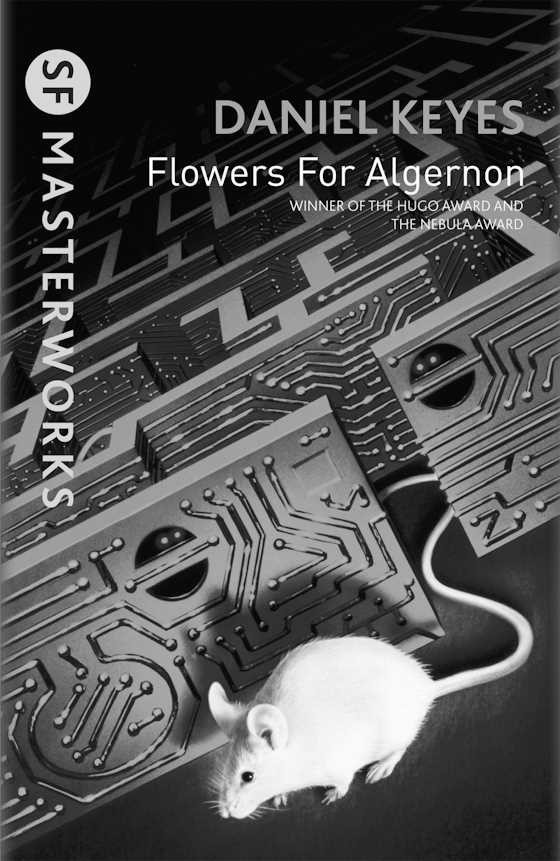
Flowers For Algernon — Daniel Keyes

Flowers For Algernon -- Daniel KeyesThis book is incredible, and truly deserves all the accolades it has received.
What i love about this book is that while the writing itself is simple and easy going, allowing the reader to just fall into the story without distraction, the story itself is incredible in its depth and scope.

I would definitely throw this book in with Black Swan Green into the teenage education syllabus.

Essentially a man with an IQ of 70 is given an operation and turned into a genius after the incredible success of performing the same procedure on a white mouse named Algernon.   But where an isolated laboratory mouse appears a total success, a human being with a very challenging past that the new found intelligence has to come to terms with while navigating his way into a new life that he is completely unprepared for in every way, is a totally different story altogether.

For the first 15 years of my life i lived with a very damaged heart and was extremely ill and disabled, only to have my heart fixed at 15 and then left to come to terms with all that had happened to me.   Needless to say, it didn’t go very well.   And reading this book about a child who was extremely mentally disabled who suddenly gets fixed brought a lot of those old feelings from my own experiences back.   At one point i almost gave up reading it, it became so upsetting.   But the book is so well written and i just had to keep going to find out what happens to Charlie.   I’m glad i did.

There is so much truth in this book about the way people are and how they treat those they perceive as lesser than, and also those they perceive as more than.   Add to all that, there are also many parallels between Charlie’s story and the changes between drug addiction and sobriety.   Which, again, i know from experience.   There is, quite simply, a great deal for everyone to learn from this book.

And there’s also so much in this book that leaves me looking forward to reading it again in the future — after its percolated through my consciousness for a while — as i really don’t think one reading can ever do it the justice it deserves.

And that ending.

Daniel’s Page

#scifi #sfmasterworks #danielkeyes

South — Ernest Henry Shackleton

South -- Ernest Henry ShackletonA most fascinating piece of history, written up by Ernest from the diaries, logs and journals that survived his calamitous attempt at crossing the Antarctic.   It seems that if it could have gone wrong, it did go wrong.

There’s that all pervasive, Victorian attitude of bloody minded, arrogant perseverance throughout this book, and it certainly feels that that is all that kept these people alive, but it’s also what got them into the mess in the first place.

Having been beaten to be the first to get to the South Pole by Roald Amundsen, Shackleton decided to turn his sights on being the first to cross the Antarctic.   It certainly seems to me that this need to be the first, to always be proving that the British could do something quicker and better than any other nation, caused Shackleton to rush into something he was completely unprepared for.   Whereas Amundsen, being Norwegian, was obviously very used to dealing with very cold temperatures, was fully trained with sled dogs and their uses, and set out fully trained and physically fit, Shackleton appears to have just taken the bloody minded, arrogant approach of, We’re British, we know what we’re doing and nothing, not even Nature, can stand in our way.   For King and Country.   Stiff upper lip.   Tally ho!   Etc., etc..

I just get the feeling that Shackleton’s attitude was, Let’s just get going, we can’t afford to wait, we can sort it all out when we get there.

While this book is, without a doubt, an incredible testament to the incredible bravery, fortitude and perseverance of humans to survive when pushed well beyond all imaginable limits, it’s also a testament to some incredible stupidity.

Yes, i realise, that that was the zeitgeist: to just keep throwing people, lives and equipment at a problem until it was dealt with.   Human life was not held in such high regard back then as it is today.   Spending a few years properly planning and training was simply unacceptable when other nations would have no such restraint and do it before us.   So one does have to weigh this account in that regard, and when weighted in that light Shackleton did an incredible job, and it’s always so easy to criticise with hindsight.   If the weather had been with him those years then what could have been achieved?

Anyway, while we’re on this topic, and if you want to hear more about Antarctic expeditions, the full traverse of Antarctica, solo and unaided, was only recently completed for the first time.   Have a listen:

YouTube

This content is blocked because YouTube cookies have not been accepted.

Ernest’s Page

#ernesthenryshackleton