The Book of Tea — Kakuzo Okakura

The Book of Tea -- Kakuzo OkakuraIn direct contrast to The Wisdom of Tea, in which we are taken on a 25 year journey of a Tea practitioner from their very first lesson, in The Book of Tea we are given the history of Tea itself and its associations through the ages with Eastern religions and philosophy.

As such, this book is wonderful and it makes one realise that there is so much more to Tea than simply throwing some tea leaves in a pot.   There are some great passages in this book where Kakuzo has some wonderful rants about western culture which are a delight to read.   One can really get a vision of just how coarse the Devon Cream Tea in a sea side cafe — not forgetting morning tea in mother’s finest china with a biscuit — is when compared to Japanese Tea in a traditional tea hut, even though the English will proclaim these two tea ceremonies of theirs as the height of culture.

A must read for all who enjoy reading about Japan and its culture, and anyone who enjoys a cup of tea, however you may take it.   Written over 100 years ago and is as relevant today as it was when it was written.

Kakuzo’s Page

#japan #kakuzookakura

The Wisdom of Tea — Noriko Morishita

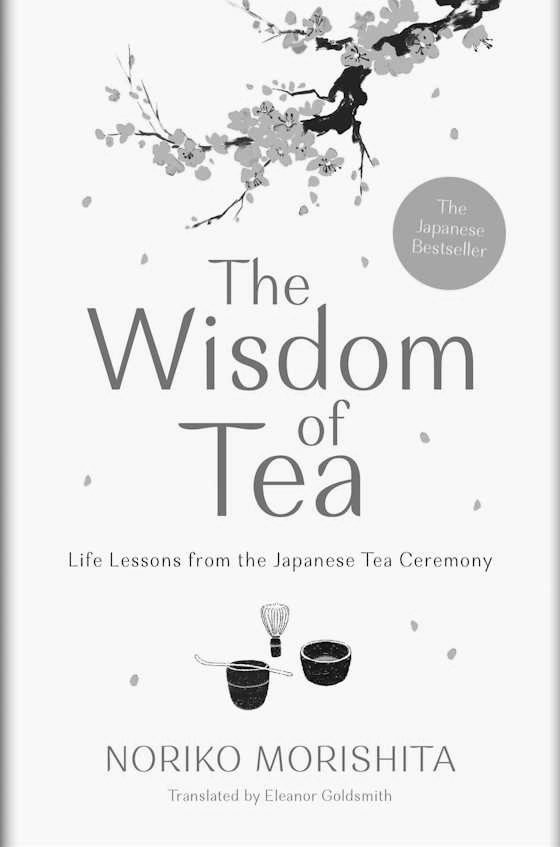
The Wisdom of Tea -- Noriko MorishitaIf you enjoy reading about Japan and its culture then this book will be very much for you.   In The Wisdom of Tea Norika tells us about her first 25 years journey learning all about Tea and in so doing gives us a wonderful view inside this part of Japanese culture that most of us would never have gotten to see.
Starting at 20 years old, Noriko is badgered into going to Tea lessons by her mother and cousin and only agrees to go so that she can go to a cafe with her cousin afterwards to hang out and just be 20 year olds away from the oldies.   Little did she know at the time that 25 years later she would still be going to the same lessons every Saturday and writing a book about her experiences in the Tea room.

What looks from the outside to be a fairly simple thing, as Noriko takes us on her 25 year journey she makes us realise many of Tea’s facets and depths as she slowly learns that Tea is a life long learning experience that will only end when we end life itself.

After reading this book, all i can say is that if i knew where i could get Tea lessons near me i’d be signing up tomorrow.

Well worth a read for everyone interested in Japanese culture, Zen and other such things.

And if you haven’t read it already, do be sure to have a read of The Book of Tea, which further explores the history of this wonderful beverage and culture.

Noriko’s Page

#japan #norikomorishita

Citizen — Claudia Rankine

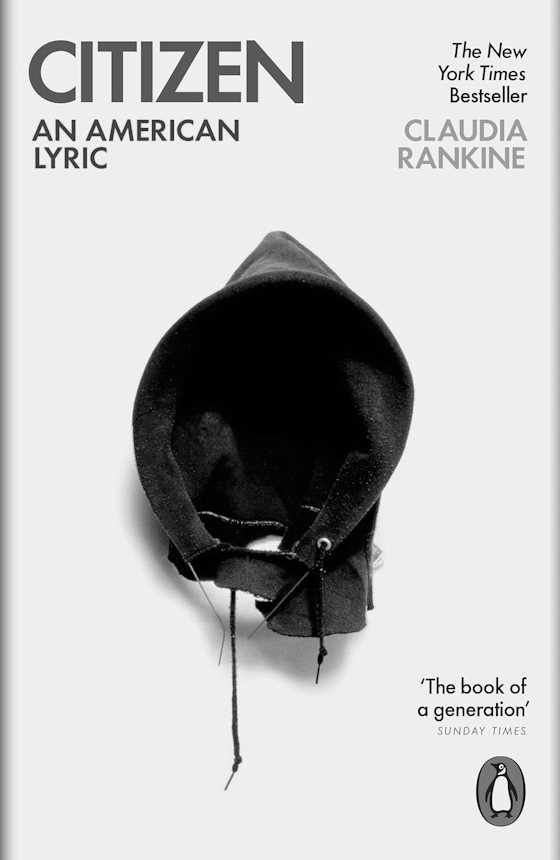
Citizen -- Claudia RankineA rather different way of saying the things that need to be said, containing a mixed bag of poetry, prose, vignettes, etc., detailing what it’s like to be perpetually on the receiving end of racism, from micro-agressions to extremely overt racism.
Maybe, instead of forcing children to read Shakespeare and Dickens at school, we should be encouraging them to read books like this and encouraging them to engage in constructive dialogue with each other about the issues raised and the experiences of those on the receiving end of racism and other bigotry.   Racist is not something people are born, it’s something people are taught, and its very clearly up to schools and educators to start stepping up and making much more effort with the young minds in their care.

In the UK “Citizenship” and “Relationship” education is not on the curriculum until after 11 years of age: this is far, far too late.   How our societies are peopled — our citizens — and how we relate to those other citizens within our societies should be permanently on the curriculum from the very first day of school, not be left in the hands of young people’s peers, bad television, bad websites, and ignorant parents who read nothing but vile, tabloid drivel.   A child who has been nurtured badly up to the age of 11 is highly unlikely to respond to positive nuturing by over-worked, underpaid, stressed-out teachers after the age of 11.

Claudia’s Page

#poetry #claudiarankine

Walden — Henry David Thoreau

Walden -- Henry David ThoreauAfter reading Into the Wild, where this book gets a fair bit of mentioning, one just had to see what all the fuss was about.

It certainly starts off incredibly well with the first 25% of the book — being mostly one chapter titled, “Economy” — explaining the ins and outs of what leads Thoreau to Walden Pond and away from a normal life and the cost of doing so.   And it is very clear in this first quarter that Thoreau is a very capable writer who can get straight to the heart of the matter and keep the reader’s attention.

But then we begin the second chapter, “Where I Lived and What I Lived For”, and thus the tedium begins: word after word of pointless, boring tedium.   Was it so utterly dull for him sitting by the pond, day after day after day with no one to talk to, that he just sat and wrote words for hour upon hour and simply spewed them forth upon pages enough to make up a reasonable amount to call it a book in order to sell it so he didn’t have to get a real job?

I just found myself reading paragraph after paragraph with a totally numbed out mind, noticing only a few words of interest here and there but mostly it’s just babble: babble, babble, babble, babble, blah, blah, blah.   I tried, i really did, but i just cannot see why people so rave about this book.

Maybe chapter 3 onwards is back to the standard of chapter 1, but i simply could not get through chapter 2.

So, inevitably, it got …

Deleted.

Henry’s Page

#philosophy #henrydavidthoreau #whataloadofcrap

Revolution — William Manners

Revolution -- William MannersAs a lifelong cyclist who has never owned a car i was so looking forward to reading this and i wasn’t disappointed.

Overall, simply an excellently researched book on the birth of cycling in the UK, especially focusing on the boom years of the 1890’s.

And as much as this should be in every cyclist’s book collection, it should also be in every feminist’s book collection.   The history of the bicycle would not be complete without it being placed, centre stage, in those early years of women’s freedom and suffrage.

All hail the humble bicycle: a true vehicle of freedom and the most efficient form of transport ever invented.   Nothing will propel you for so little watts per mile as a well manufactured and maintained bicycle can.   It has well and truly stood the test of time.

As H.G. Wells once remarked: Every time I see an adult on a bicycle, I no longer despair for the future of the human race.

Long live the bicycle.

William’s Page

#bicycles #cycling #bikes #gettingfitter #roads #transport #fitness #health #williammanners